Quality and Testing
A cosmetic ingredient is only as useful as the evidence behind it. For every batch of silk protein we make, you can see what was tested, what the limit was and what the result was.
On this page, we explain how quality works at Livora, from the cocoon to the certificate. You can use it as a checklist when you review us as a supplier.
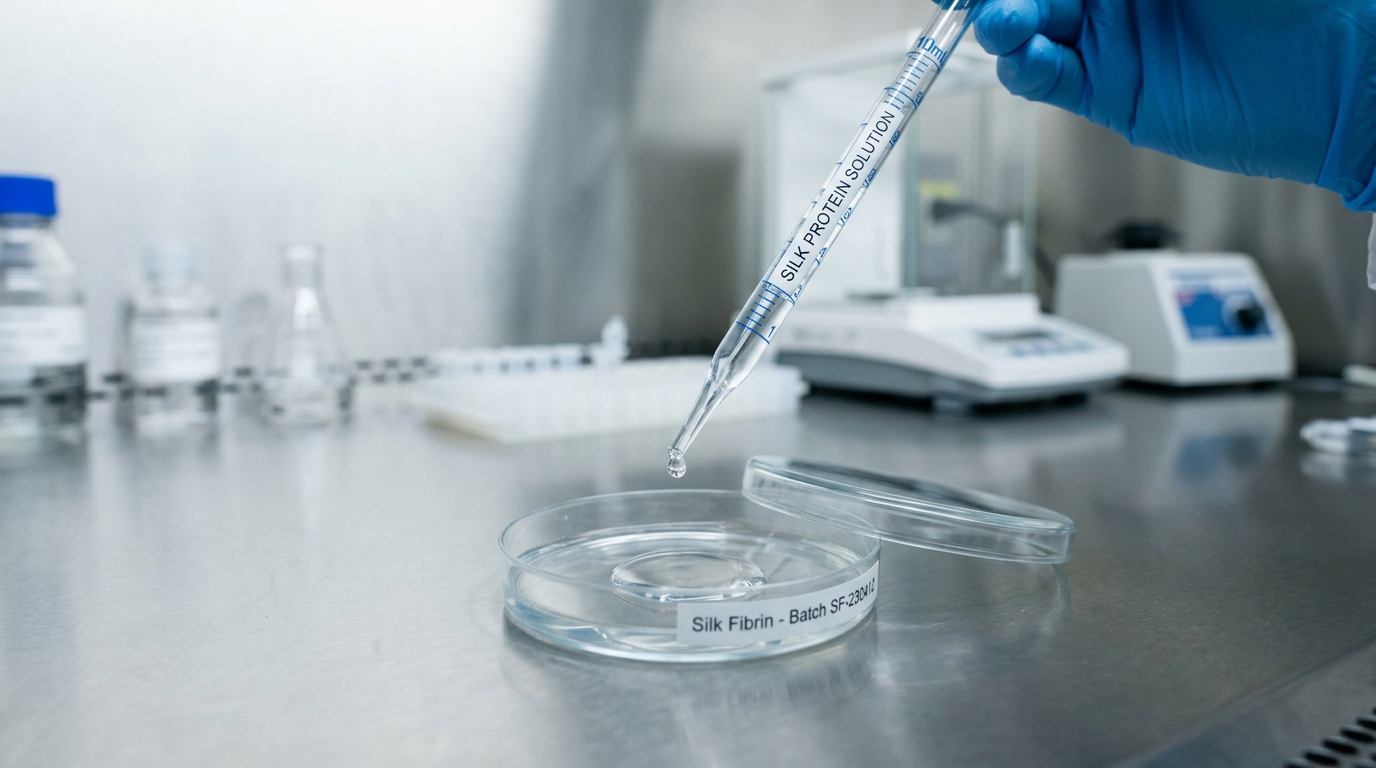
Our approach to quality
Quality starts before the process does. We follow five principles:
- 01
Know the raw material
Cocoons are graded and cleaned, and each lot is recorded.
- 02
Control the process
Each step in our process has a record: time, temperature and the person who ran it.
- 03
Test every batch
The batch is tested against the specification before it is released.
- 04
Document the result
Results go on a certificate of analysis for that batch.
- 05
Keep it traceable
A batch number links the pack in your warehouse to the cocoon lot it came from.
From cocoon to certificate
Receive and record
Each cocoon lot gets a lot number.
Grade and clean
Cocoons are sorted and cleaned before extraction.
Process
Extraction, filtration and drying or concentration follow a written procedure.
Test
Samples from the batch are tested against the specification.
Release
A batch is released only if the results meet the limits.
Ship with documents
The certificate of analysis for that batch goes with the shipment.
What we test
The exact list depends on the grade, and it is on each technical data sheet. A cosmetic protein ingredient is usually specified on these parameters:
- Appearance, colour and odourAffects the look and smell of your finished product
- pH of a solutionAffects your formula's pH and stability
- Moisture or solidsTells you how much active material you are adding
- Molecular weight rangeDecides how the grade behaves in your formula
- Protein contentShows how concentrated the ingredient is
- Microbial countsProtects your product from contamination
Tests on every lot
| Test | Limit |
|---|---|
| Pathogens | Absent (E. coli, S. aureus, P. aeruginosa, C. albicans) |
The documents you receive
- Technical data sheet (TDS)Specification, typical properties, recommended use and storage
- Certificate of analysis (COA)Test results for the batch you receive
- Safety data sheet (SDS)Handling, storage, hazards and transport
- INCI nameThe standard name for your ingredient list
See what each one tells you, and what to watch for, in our guide to TDS, COA, SDS and INCI.
Traceability
- Every pack carries a batch number.
- The batch number links to the production record, the test results and the cocoon lot.
- If you ever have a question about a delivery, quote the batch number and we can answer from the record.
Reviewing us as a supplier
- Send your supplier questionnaire with a sample request.
- Ask for the certificate list and the documents behind it.
- Ask to see a record for a batch you have received.
- Ask to visit, or request a remote walk-through.
Questions you may have
Our answers are in the FAQ below. If your question is not there, contact us.
What documents do you send with a sample?
A technical data sheet, a certificate of analysis for the batch sent and a safety data sheet, together with the INCI name for the grade.
Is the certificate of analysis specific to each batch?
Yes. Each certificate carries the batch number, the test results, the specification limits and the date, so you can match it to the container you receive.
Can I trace a batch back to its raw material?
Yes. Each batch number links to the cocoon lot and the production record. Ask us for the traceability details you need for your supplier file.
Can I send you my supplier questionnaire?
Yes. Send it with your sample request and we will complete it.
Can I audit your facility?
Contact us with your requirements. We will arrange a visit or a remote walk-through of the process and records.
Do you hold certifications?
Ask us for the current list of certificates we hold. We only state certificates that we can send you as a document.
Keep learning
 Buying guide
TDS, COA, SDS and INCI Explained: A Buyer's Guide (2026)
What a TDS, COA, SDS and INCI name tell you, when to ask for each, and the red flags to watch for in a cosmetic ingredient supplier's paperwork.5 min read Silk proteins
Hydrolyzed Sericin vs Sericin Powder: Which One to Use (2026)
Hydrolyzed sericin and sericin powder differ in molecular weight and feel. Learn how to choose between them for toners, serums and creams.3 min read Buying guide
Sourcing Silk Protein From India: 10 Questions to Ask (2026)
Buying sericin or silk peptide from India? Ten questions to ask any supplier about source, documents, batches, samples and shipping.3 min read
Request a sample with documents
Tell us the grade and your product type. We will send the sample with its data sheet, certificate of analysis and safety data sheet.