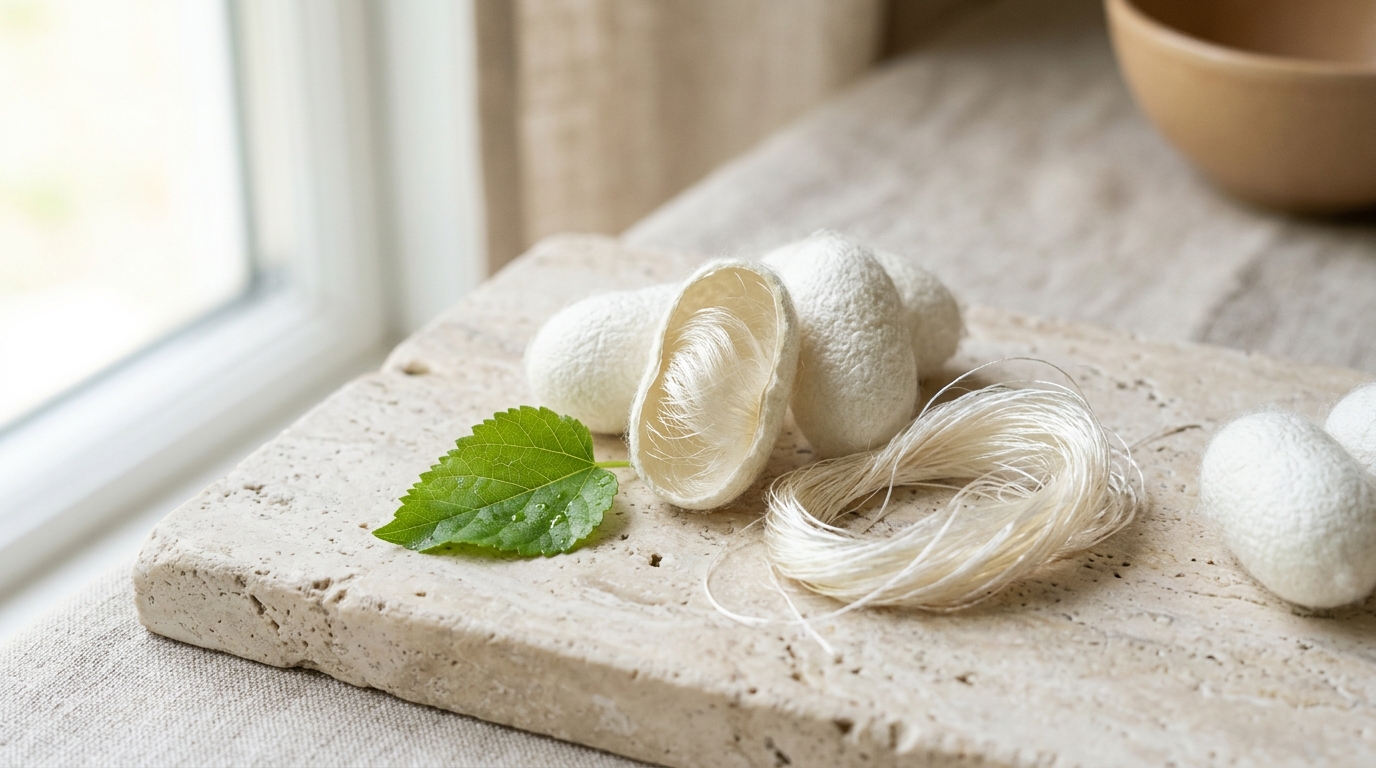
Sericin is one of those ingredients that sounds technical until you see where it comes from. It is the sticky coating on a silk thread. A silkworm makes it, wraps it around the silk fibre, and uses it to glue the cocoon together.
For cosmetic formulators, that coating is useful. It is a water-soluble protein that holds water, forms a thin film and feels soft on skin and hair. It also comes from a material that silk processing would otherwise wash away.
In this guide, we explain what sericin is, how it is made, what it does in a formula, and how to choose between the forms on the market. We make sericin ingredients ourselves in Ramanagara, Karnataka, so we also show you the mistakes we see buyers make.
What is sericin?
Sericin is a protein found in silk cocoons. When a silkworm spins a cocoon, it produces two proteins at the same time:
- Fibroin forms the strong inner fibre.
- Sericin is the gum-like coating that surrounds each fibre and holds the threads together.
In textile making, sericin is usually washed off so the silk becomes soft and shiny. Ingredient makers collect and purify it instead, and it becomes a protein ingredient for skin care and hair care.
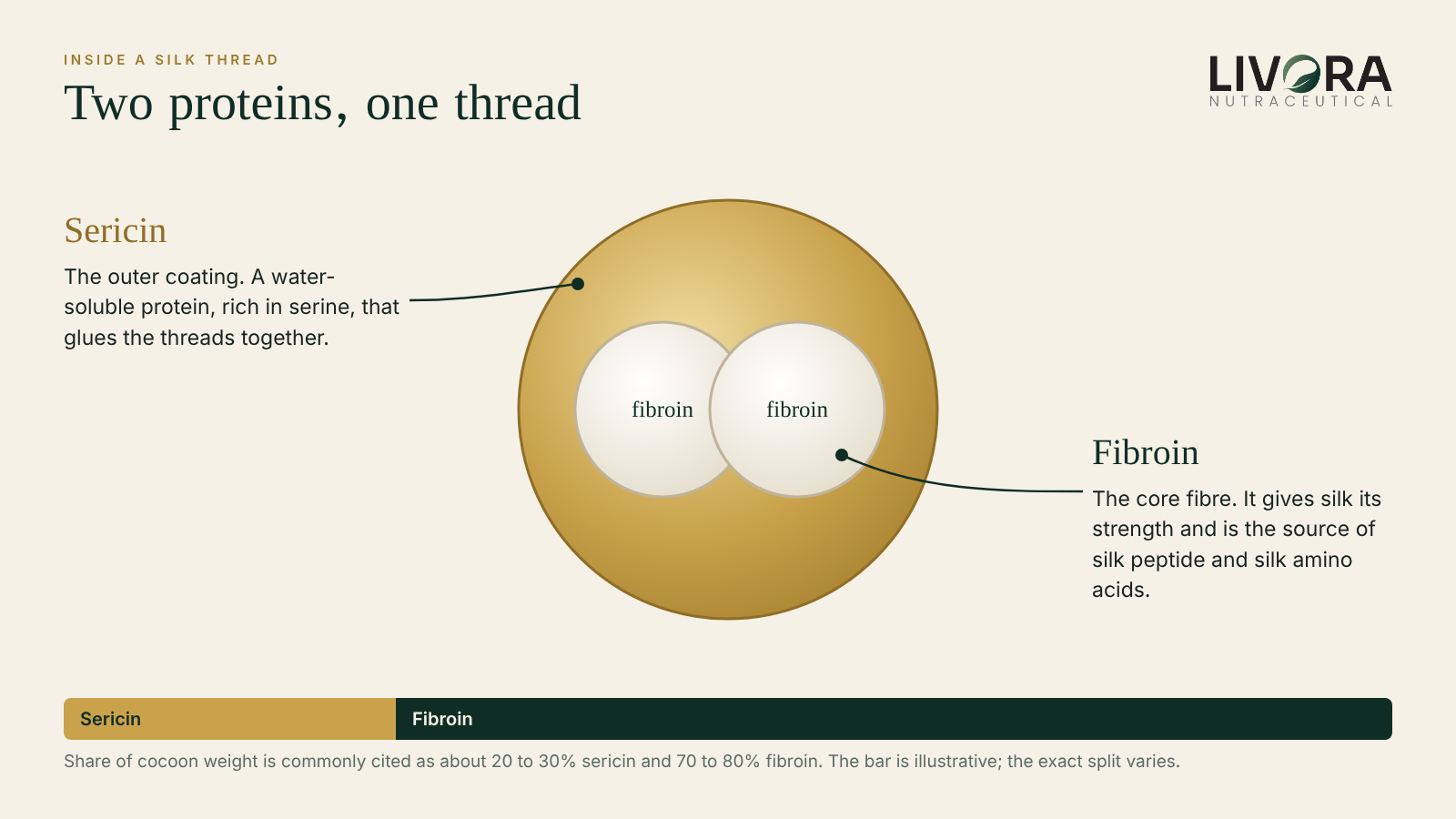
The proportion of sericin in a cocoon is commonly cited as roughly a fifth to a third of its weight. It varies with the silkworm race and how it is measured, so treat any single percentage as approximate.
How is sericin made?
Every maker has its own method, but the route is broadly the same:
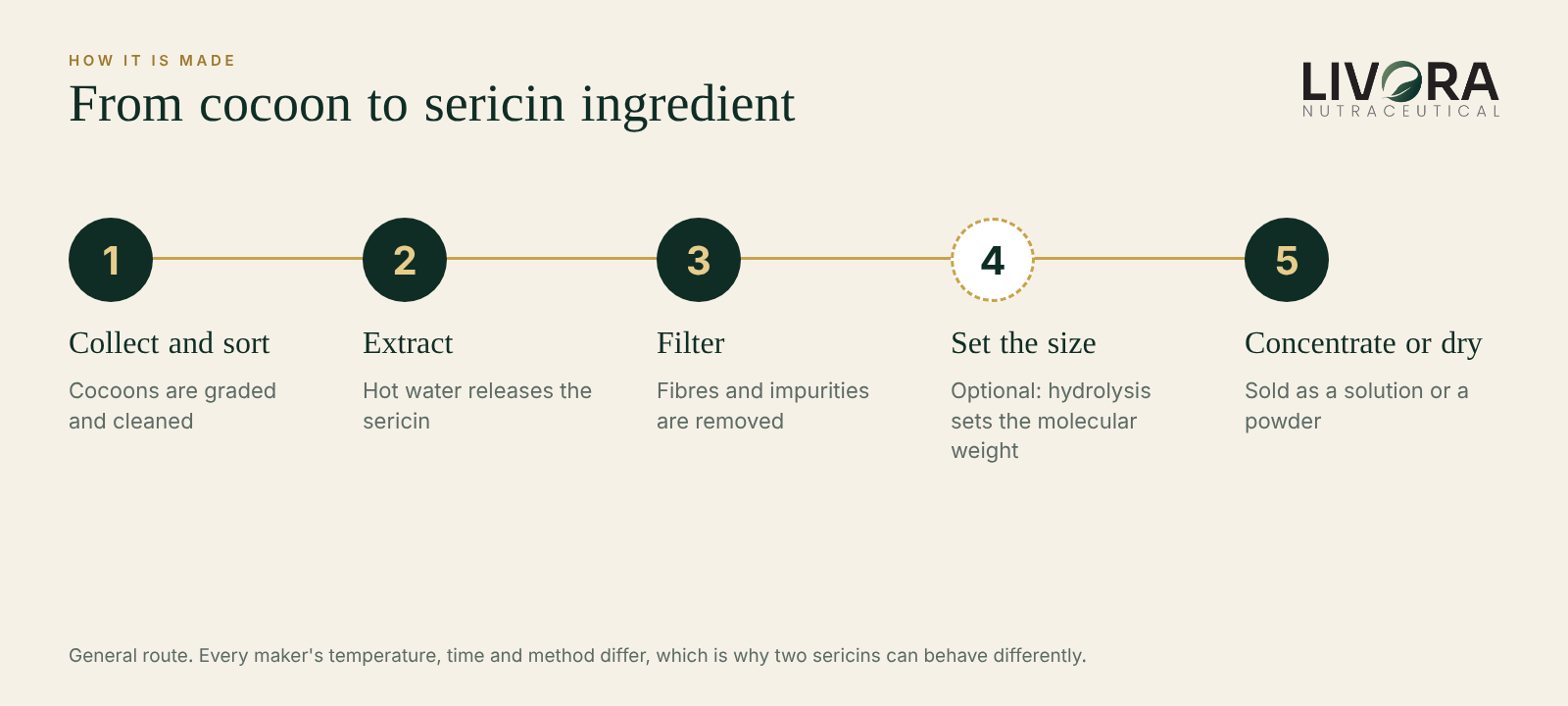
- Collect and sort the cocoons. Quality starts here. Cocoons are graded and cleaned.
- Extract the sericin. Hot water softens the coating and releases the sericin into the water.
- Filter the solution. Fibres and impurities are removed.
- Adjust the size (optional). For hydrolyzed grades, the sericin is broken into smaller pieces. This step sets the molecular weight.
- Concentrate or dry. The result is sold as a solution or as a powder.
The details, such as temperature, time and how the size is set, change how the final ingredient behaves. That is why two products with the same name can feel different. You can read our own steps on the process page.
What is sericin made of?
Sericin is a chain of amino acids. Its profile is dominated by amino acids that attract water, especially serine, along with aspartic acid and glycine. These carry polar groups, which is why sericin dissolves in warm water and holds water well.
Sericin is also not one single molecule. Depending on how it is extracted, the pieces can range from small fragments to very large chains. This range is called the molecular weight, and it decides much of how sericin behaves. Think of it as the size of the pieces:
- Larger pieces stay on the surface, form a film, and add body and a smooth coating feel.
- Smaller pieces dissolve easily, stay light and clear in watery products, and feel less heavy.
What does sericin do in cosmetics?
Sericin earns its place in a formula for a few practical reasons:
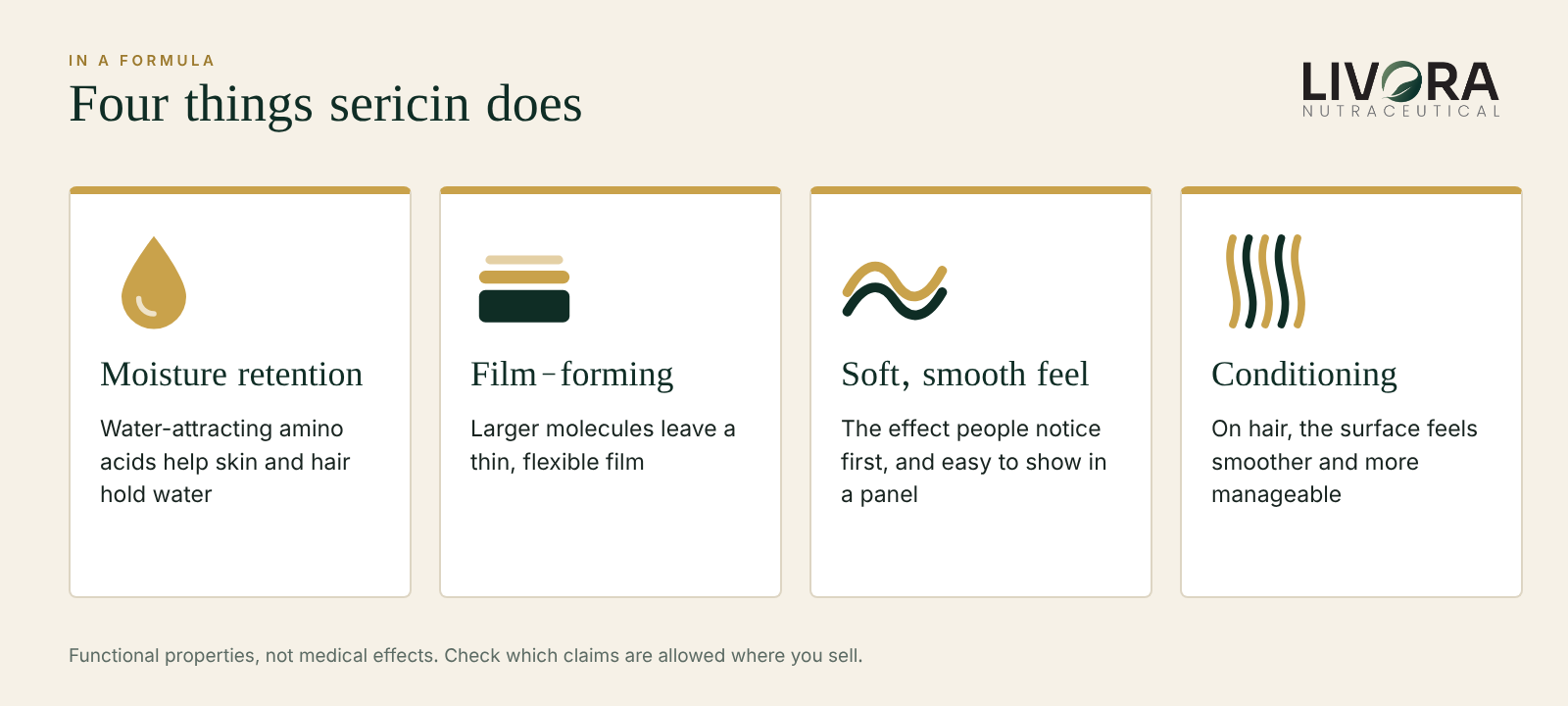
- Moisture retention. Its water-attracting amino acids help skin and hair hold water.
- Film-forming. Larger sericin molecules leave a thin, flexible film on skin or hair.
- A soft, smooth feel. This is the effect people notice first, and it is easy to show in a sensory panel.
- Conditioning. On hair, sericin helps the surface feel smoother and more manageable.
- A natural-origin story. Sericin is a by-product of silk production, which supports a sustainability message. Read more about our approach to sustainability.
These are functional properties. They describe what an ingredient does in a formula, not a medical effect. Always check which claims are allowed in the market where you sell.
Sericin vs fibroin vs silk peptide
People often mix these up. They are all silk proteins, but they come from different parts of the cocoon and behave differently.
| Sericin | Fibroin | Silk peptide | |
|---|---|---|---|
| Where it comes from | The coating | The core fibre | Fibroin, broken into smaller pieces |
| Typical forms | Powder, hydrolyzed powder, solution | Fibre, powder | Powder, solution |
| What it brings | Moisture-retaining feel, film, conditioning | Strength and structure | Conditioning, soft feel |
| Common use | Skin care, hair care | Textiles, some cosmetics | Hair care, skin care |
Another way to see the difference is by size and feel. The chart below places the main silk ingredients on two simple axes. It is illustrative, not measured data, but it shows why the choice depends on the product.
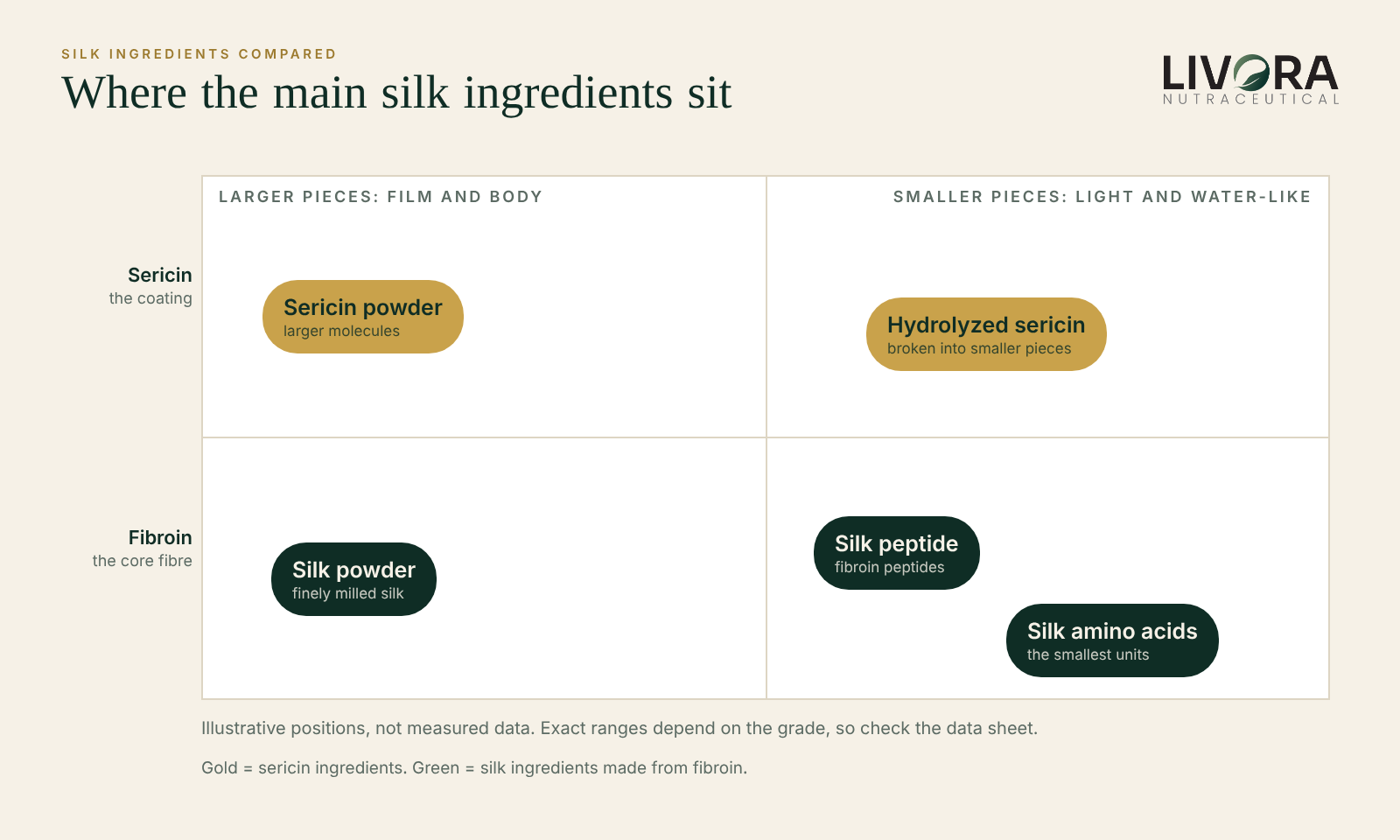
You can compare our silk peptide and silk amino acids alongside sericin.
What forms of sericin can you buy?
| Form | What it is | Typical use |
|---|---|---|
| Sericin powder | Sericin dried into a powder, usually larger molecules | Creams, lotions, primers, where a film and body help |
| Hydrolyzed sericin | Sericin broken into smaller pieces | Toners, essences, serums, hair care, where a light feel matters |
| Hydrolyzed sericin solution | Hydrolyzed sericin as a ready-to-use liquid | Water-based products and sheet mask solutions |
We supply all three: sericin powder, hydrolyzed sericin and hydrolyzed sericin solution.
How to choose a sericin grade
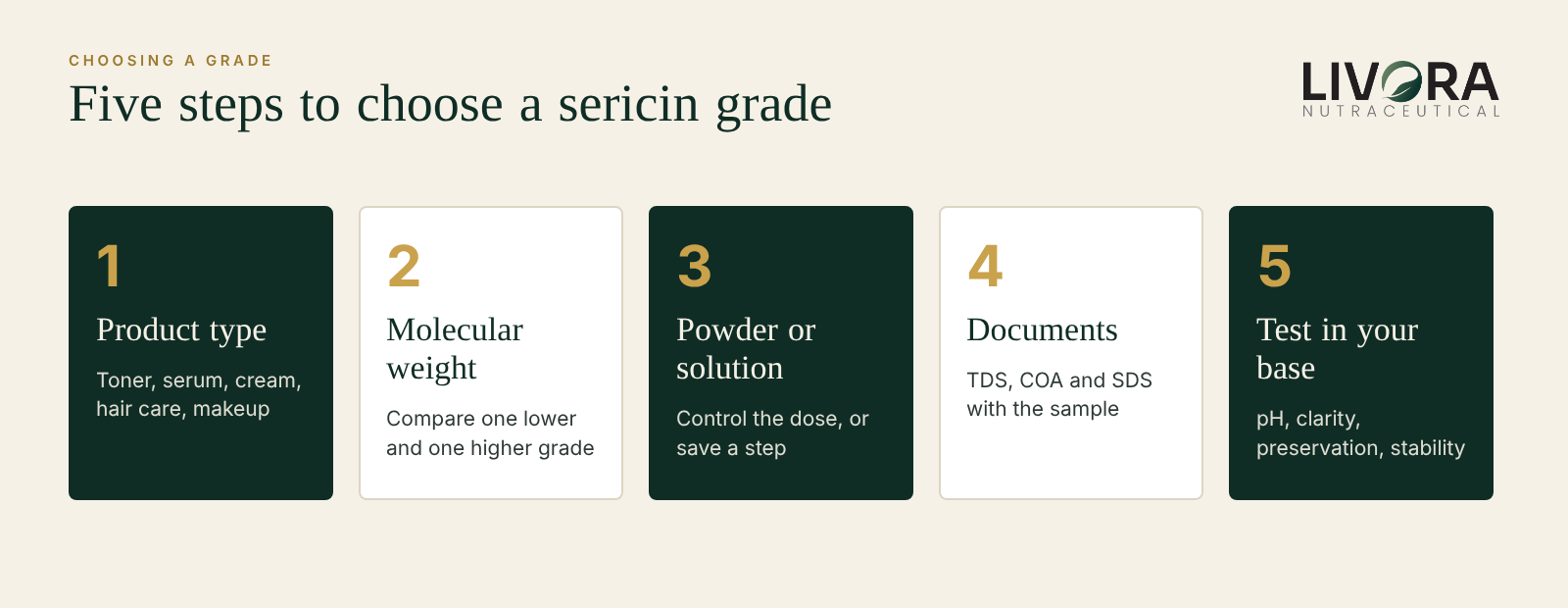
1. Start with the product type
A toner needs a different grade from a cream. Watery, clear products usually suit a smaller, hydrolyzed grade. Creams and primers can use a larger grade for body and film.
2. Decide the molecular weight
Pick one lower and one higher grade to compare in your own base. This is the single choice that changes the result most.
3. Choose powder or solution
Choose powder if you want to control the dose and water content yourself. Choose a solution if you want something ready to use and quick to add.
4. Ask for the documents
A technical data sheet, a certificate of analysis and a safety data sheet should come with the sample. Our guide to TDS, COA, SDS and INCI shows what to look for in each.
5. Test in your own base
Check pH, clarity, viscosity, colour and odour after adding. Run a preservative challenge test, because protein-rich water phases support microbial growth. Then run stability tests on the finished product.
Where sericin fits in a formula
Here are the starting points we suggest for a first trial. Confirm the choice and the use level in your own system.
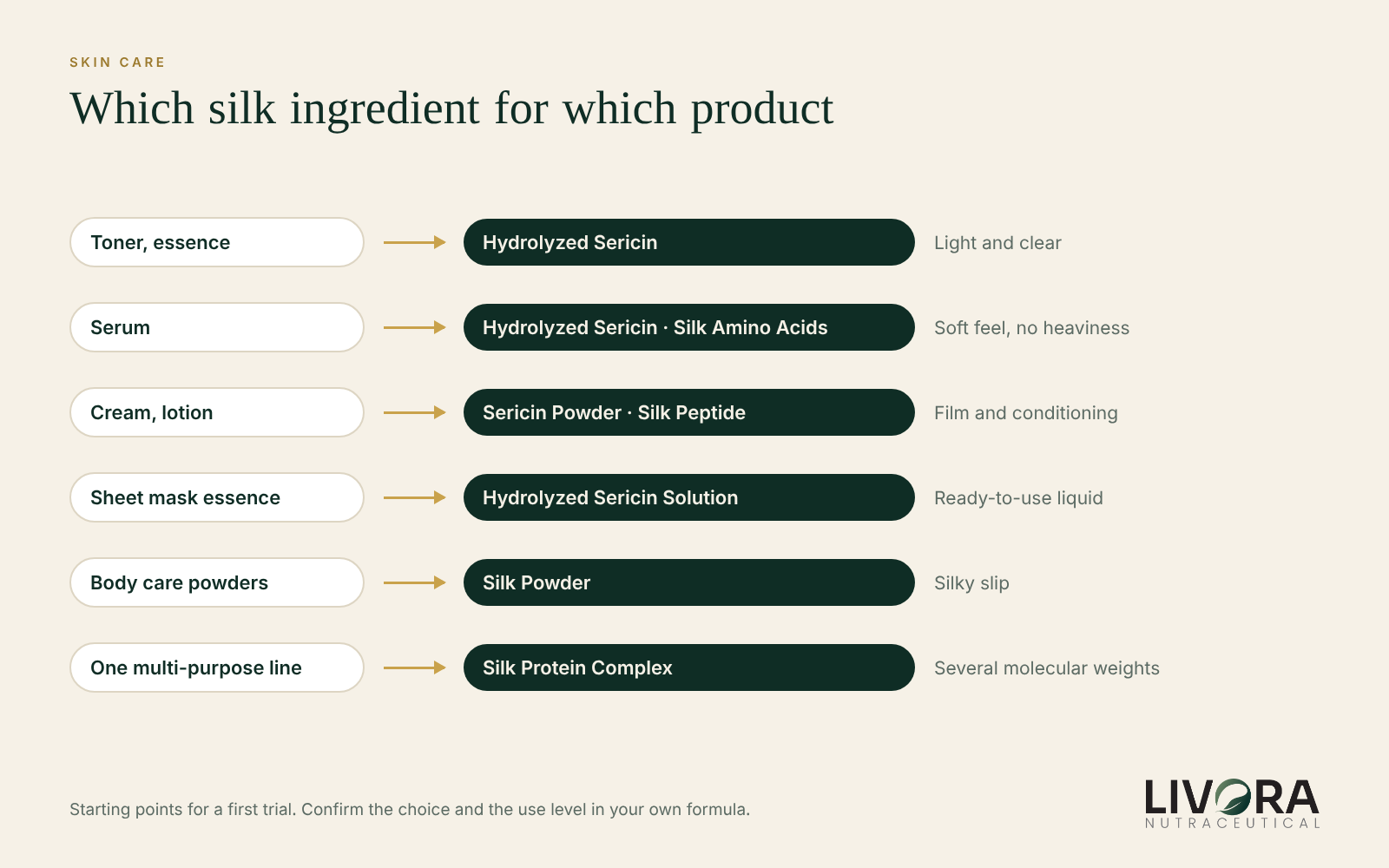
For more detail, see our page on silk proteins for skin care.
Five mistakes to avoid
- Choosing by name only. "Sericin" can mean very different sizes. Always compare the molecular weight range.
- Skipping the preservative challenge. Proteins feed microbes. Test the finished product.
- Heating past the limit. Check the temperature limit on the data sheet before you heat the phase that contains sericin.
- Testing only one grade. A single sample hides the difference between a film-forming and a light grade.
- Over-claiming. Use function words such as conditioning and moisture-retaining. Avoid treatment claims.
Final thoughts
Sericin is a simple idea with a few important details. It is the coating of the silk thread, rich in water-attracting amino acids, and its size decides what it does. Choose the product type first, then the size, then the form, and always test in your own base.
If you are not sure where to start, contact us with your product type and target market. We will recommend a grade and send a sample.
Frequently asked questions
Is sericin a protein?
Yes. Sericin is a protein made of amino acids, and it is rich in serine. It is one of the two main proteins in a silk cocoon, together with fibroin.
Where does sericin come from?
Sericin comes from silk cocoons. The silkworm spins a thread made of two proteins: fibroin forms the fibre, and sericin coats it and holds the threads together in the cocoon.
Is sericin the same as silk?
No. Silk fibre is mainly fibroin. Sericin is the gum-like coating around it. Many cosmetic silk ingredients come from fibroin, while sericin ingredients come from the coating.
Is sericin used in cosmetics?
Yes. Formulators use sericin in skin care and hair care for its moisture-retaining, conditioning and film-forming properties. Its INCI names include Sericin and Hydrolyzed Sericin.
What does hydrolyzed sericin mean?
Hydrolyzed sericin is sericin that has been broken into smaller pieces. The smaller size makes it easier to dissolve and gives a lighter feel, which suits toners, essences and serums.
Is sericin vegan?
No. Sericin comes from silkworm cocoons, so it is an animal-derived ingredient. If your brand is vegan, silk proteins are not suitable.

Written by
Livora Team
Silk protein ingredients, Ramanagara, Karnataka
We make sericin and silk fibroin ingredients for cosmetics in Ramanagara, Karnataka, from cut cocoons.
Our guides explain what each ingredient is and how formulators use it, in plain language.
Keep learning
 Buying guide
TDS, COA, SDS and INCI Explained: A Buyer's Guide (2026)
What a TDS, COA, SDS and INCI name tell you, when to ask for each, and the red flags to watch for in a cosmetic ingredient supplier's paperwork.5 min read Silk proteins
Sericin vs Fibroin: What Is the Difference? (2026)
Sericin and fibroin are the two proteins in silk. Learn where each comes from, how they differ, and which one suits your cosmetic product.3 min read Silk proteins
Silk Peptide vs Silk Amino Acids vs Silk Powder (2026)
Silk peptide, silk amino acids and silk powder all come from silk fibroin. Learn how they differ and which suits your product.2 min read Formulation
How to Trial Silk Protein in a Formula: A 6-Step Plan (2026)
A practical plan for trialling sericin or silk peptide in a cosmetic formula: what to prepare, compare, measure and record.3 min read