Silk Peptide vs Silk Amino Acids vs Silk Powder (2026)
 By Livora Team2 min readUpdated
Silk gives cosmetic formulators more than one ingredient. Three of them come from the same protein, fibroin, and they are often confused: silk powder, silk peptide and silk amino acids.
In this guide, we explain how they differ, what each is used for, and how to choose. We make all three in Ramanagara, Karnataka.
What do the three have in common?
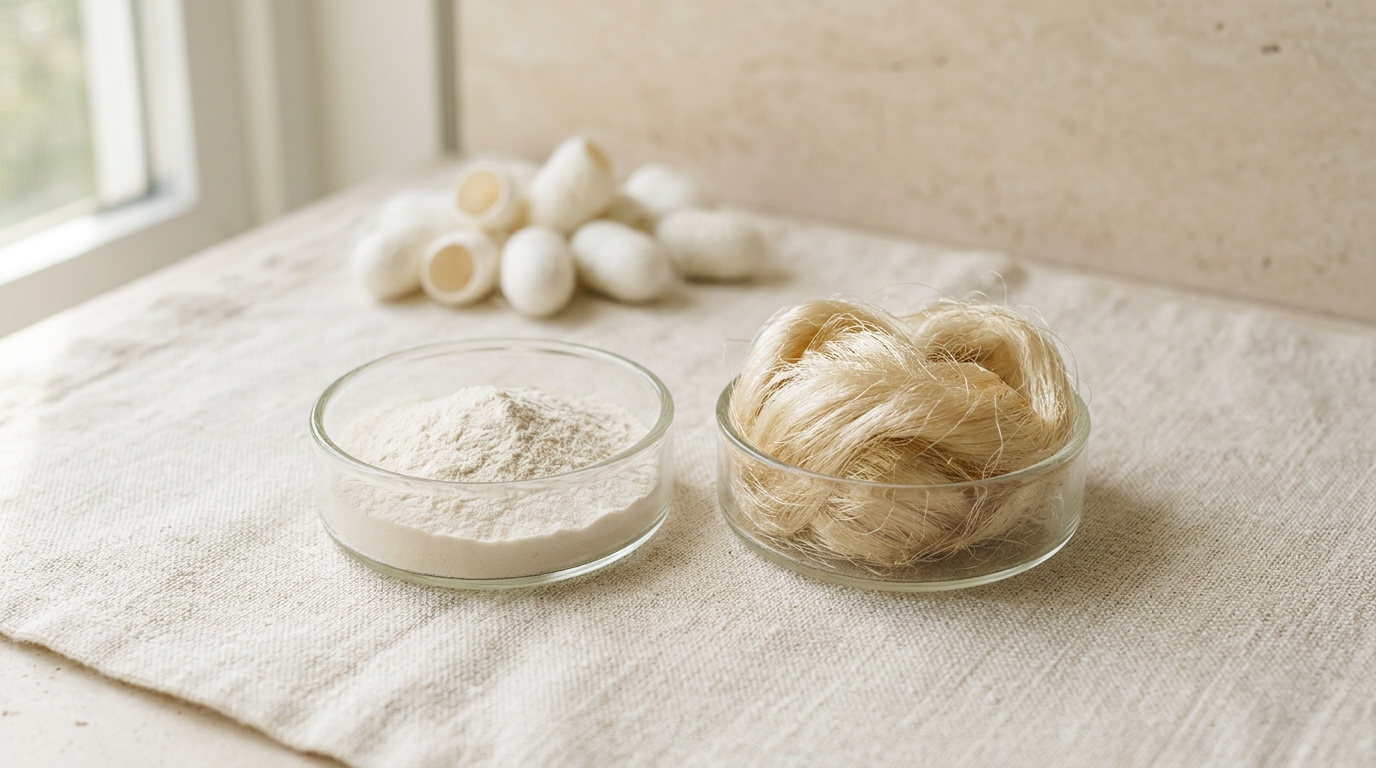
All three start from fibroin, the strong core fibre of silk. What changes is how far the fibroin is broken down:
- Silk powder is milled, not broken down chemically.
- Silk peptide is broken into mid-sized chains.
- Silk amino acids are broken down furthest, into the smallest pieces.
If you want the background on fibroin and sericin, read Sericin vs fibroin.
What is silk powder?
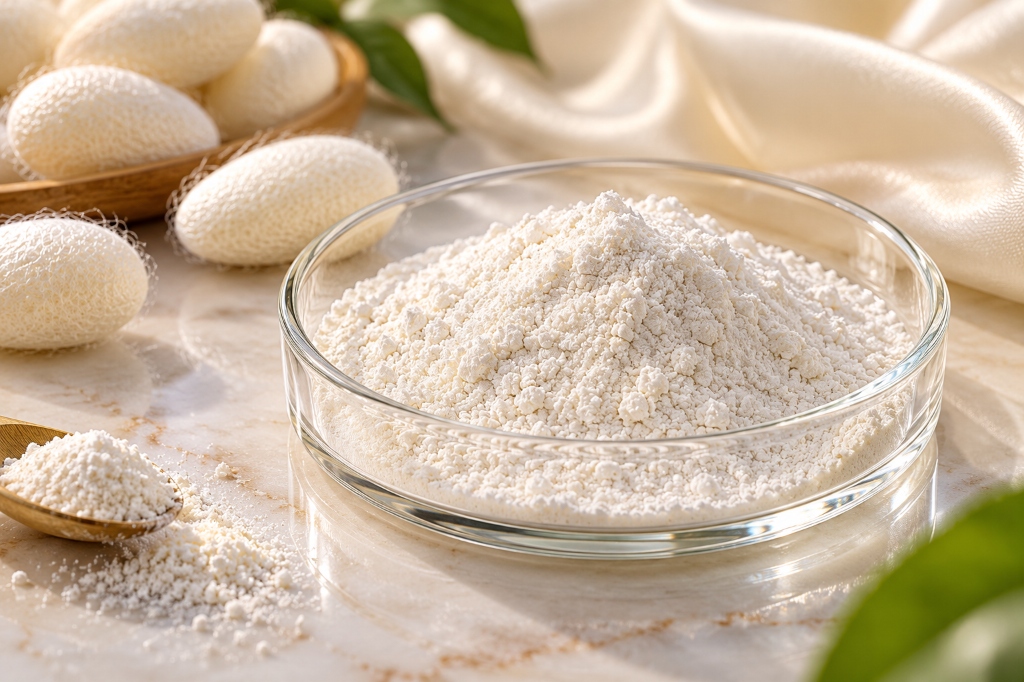
Silk powder is fibroin milled into a fine powder. It is used for a smooth, silky feel and slip in makeup and powders. See Silk Powder and our page on makeup and sun care.
What is silk peptide?
Silk peptide is fibroin broken into smaller chains. It dissolves in water and brings conditioning and a soft feel. We supply it as a powder and as a solution: Silk Peptide and Silk Peptide Solution.
What are silk amino acids?
Silk amino acids are the smallest pieces. They dissolve easily and feel very light, so they suit watery products such as toners and serums. See Silk Amino Acids.
How do they compare?
| Silk powder | Silk peptide | Silk amino acids | |
|---|---|---|---|
| Size | Largest (milled) | Mid-sized chains | Smallest |
| Dissolves in water | No | Yes | Yes, easily |
| Feel | Silky, with slip | Soft, conditioning | Very light |
| Typical use | Makeup, powders | Hair care, skin care | Toners, serums |
How to choose
- Makeup or powders: silk powder.
- Hair conditioners and creams: silk peptide.
- Toners, essences and serums: silk amino acids or hydrolyzed sericin.
- Want a blend: Silk Protein Complex combines molecular weights.
Common mistakes
- Using the three names as if they were one.
- Expecting silk powder to dissolve. It is a powder, not a soluble protein.
- Choosing the smallest by default. Smaller is lighter, not always better.
- Skipping the documents. Ask for a data sheet and certificate of analysis. See TDS, COA, SDS and INCI.
Final thoughts
Same protein, three sizes, three jobs. Choose by product, compare two grades, and test in your own base.
Frequently asked questions
What is silk peptide?
Silk peptide is silk fibroin broken into smaller chains of amino acids. Formulators use it for conditioning and a soft feel in skin care and hair care.
What are silk amino acids?
They are the smallest pieces made from silk fibroin, separated into single amino acids or very short chains. They dissolve easily and feel very light.
What is silk powder used for?
Silk powder is milled silk fibroin. Formulators use it in makeup and powders for a silky feel and slip.
Which one suits a hair conditioner?
Silk peptide is a common starting point for conditioning. Compare it with a sericin grade in your base.
Are these ingredients vegan?
No. They come from silkworm cocoons, so they are animal-derived.
Written by
Livora Team
Silk protein ingredients, Ramanagara, Karnataka
We make sericin and silk fibroin ingredients for cosmetics in Ramanagara, Karnataka, from cut cocoons.
Our guides explain what each ingredient is and how formulators use it, in plain language.
Keep learning
 Silk proteins
Sericin vs Fibroin: What Is the Difference? (2026)
Sericin and fibroin are the two proteins in silk. Learn where each comes from, how they differ, and which one suits your cosmetic product.3 min read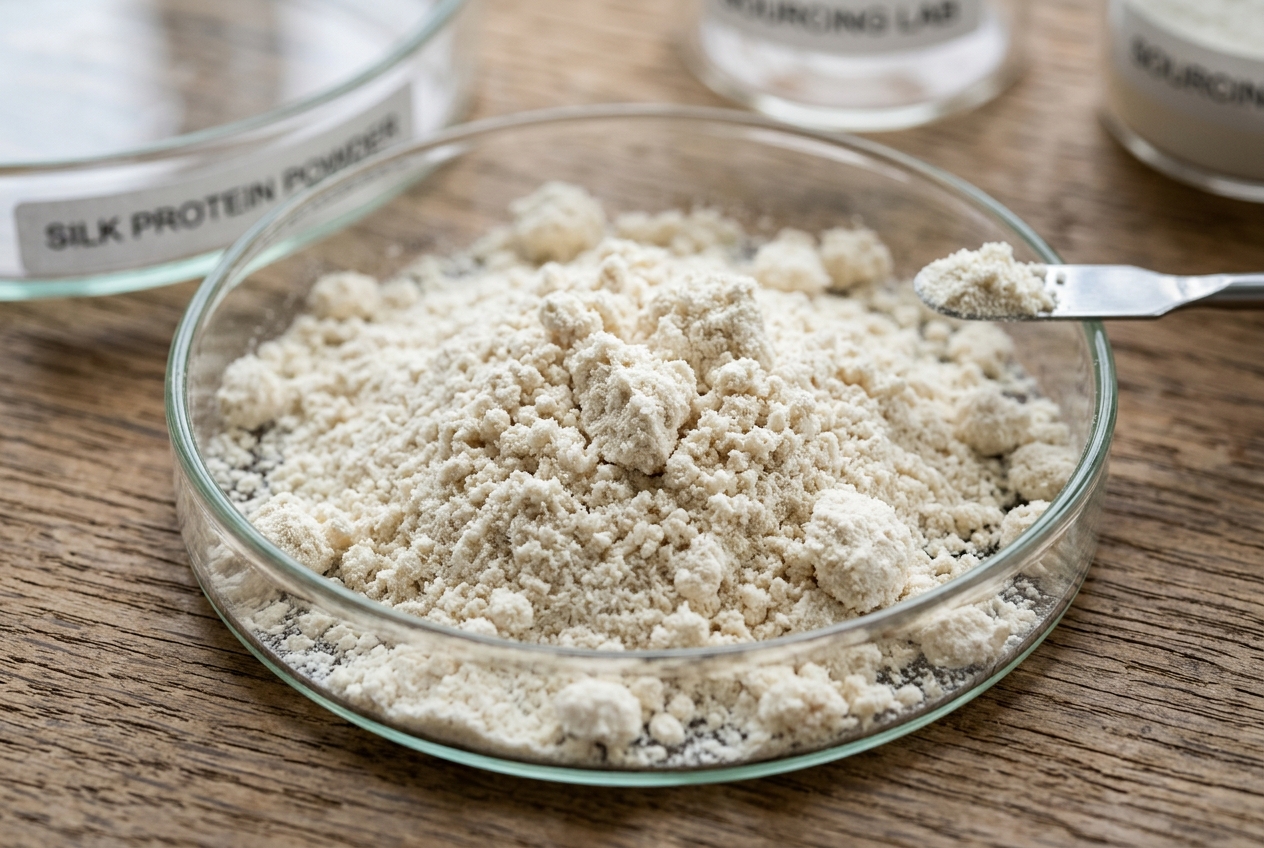 Buying guide
TDS, COA, SDS and INCI Explained: A Buyer's Guide (2026)
What a TDS, COA, SDS and INCI name tell you, when to ask for each, and the red flags to watch for in a cosmetic ingredient supplier's paperwork.5 min read Silk proteins
Hydrolyzed Sericin vs Sericin Powder: Which One to Use (2026)
Hydrolyzed sericin and sericin powder differ in molecular weight and feel. Learn how to choose between them for toners, serums and creams.3 min read Silk proteins
What Is Sericin? A Formulator's Guide (2026)
Sericin is the protein that holds silk fibres together. Learn how it is made, what it does in cosmetics, and how to choose the right grade.6 min read